







Many Bids lose not because the capability is lacking, but because the documentation doesn’t clearly demonstrate compliance (of QR/Tech. Specs), clarity and credibility. A responsive bid is one that aligns perfectly with client requirements in terms of requisite experience, specifications and documentation.
Proper documentation in a Bid ensures –
- Zero ambiguity: as every requirement is addressed clearly with evidence
- Compliance is evident: as no assumption, no interpretation just proofs are presented
Submission of proper documents in a bid makes your bid informal for evaluation, easier to score and harder to reject. Documentation in a Bid is not paperwork, its positioning your chances to get qualified and win the project.
Documentation against compliance alone does not win in today’s increasingly competitive marketplace. A bidder must work with the customer, prior to RFP release, to understand the hot-button issues and then clearly address those issues in the proposal. Compliance can prevent your proposal from being eliminated, but responsiveness edges out the competition.
Bid Management, Process & Optimization
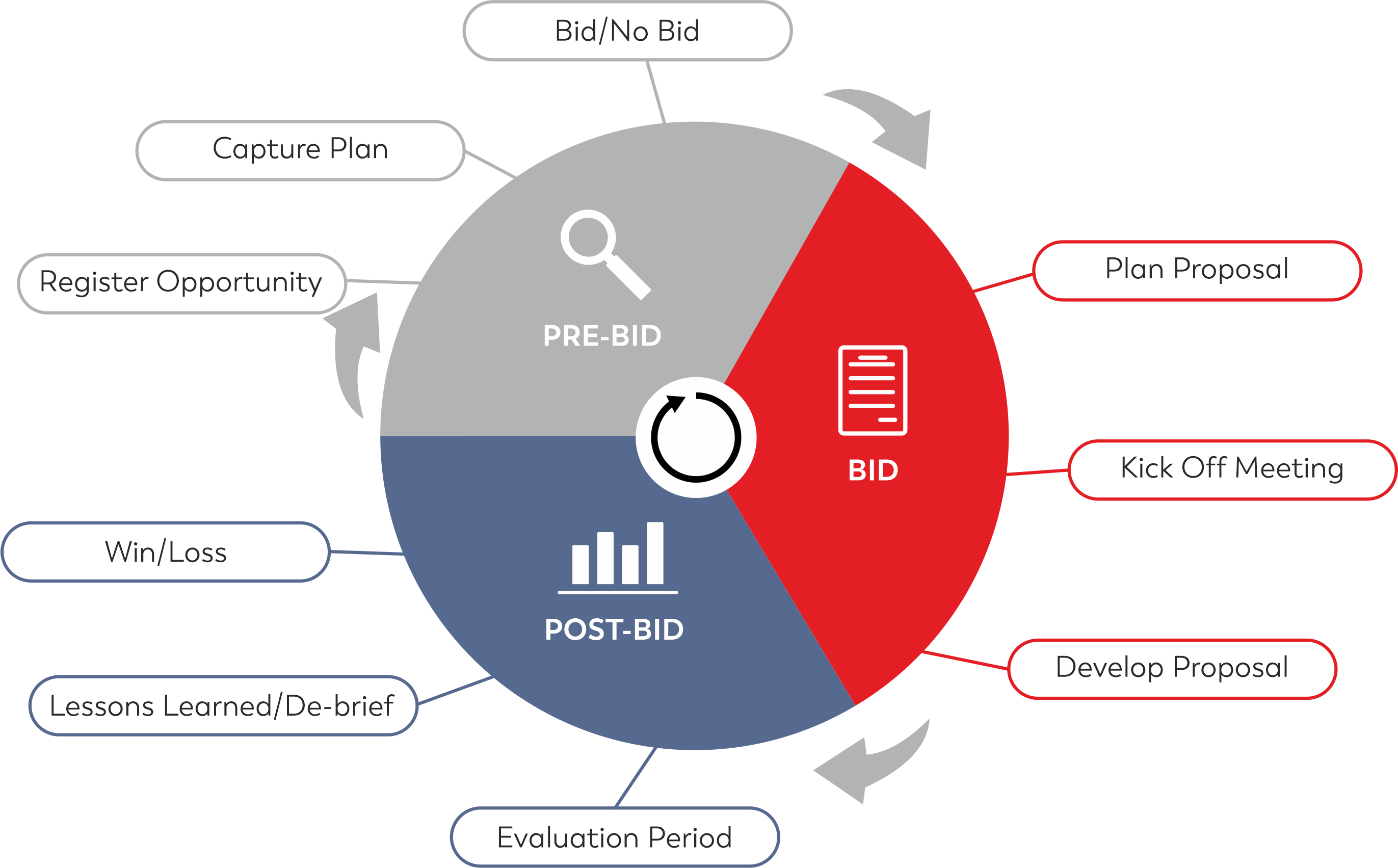
KEY FACTORS FOR EFFECTIVE BID MANAGEMENT
Importance of bid decision gates and positioning

There is a misconception that “by bidding more, we will win more.” This is a costly mistake company’s make, compared to those that leverage the power of bid decision gates and effective opportunity reviews.
It is better to make the tough decision to no-bid rather than waste money on a marginal opportunity.
Bid / Proposal Organization
A well-organized proposal is easy for readers to understand and evaluate. You can well organize your bid/proposal through careful planning of proposal content.
Best Practices:
- Plan content before you write.
- Organize your bid or proposal according to the customer’s instructions.
- Make information easy for evaluators to find through proper indexing.
- Put the most important points first.
- Bid/Proposals should be compiled/organized by keeping customers in mind, following their requirements and making navigation simple.
- Put the most important information first, followed by less critical information.
Regular follow-up with Team /Stakeholders

Keeping your team moving toward delivery of an on-time, compliant, winning proposal calls for a blend of follow-ups, regular meetings, consistency, flexibility, and judgment.
Best Practices:
- Make sure that daily activities are consistent with a written plan or key responsibility matrix.
- Conduct a short, regular stand-up review or call.
- Identify roadblocks on the stand-up or call and resolve it jointly with concerned stakeholders
- Clarify roles and responsibilities to avoid duplication of effort and ensure complete coverage of all proposal functions.
- Track activities through a daily mail showing the progress, but not in so much detail that the tracking interferes with the development of content.
- Use appropriate techniques to keep the team motivated and productive.
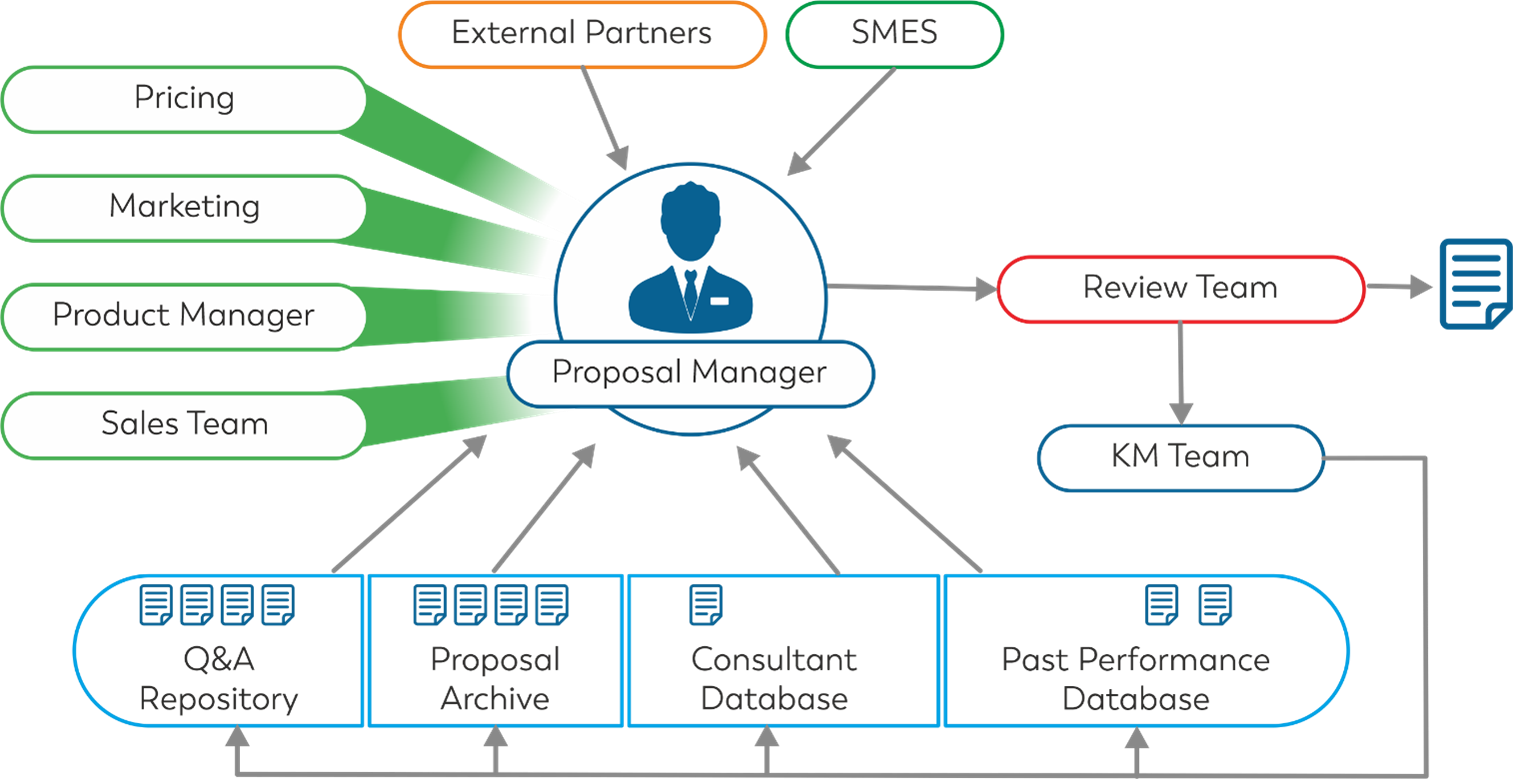
Information Flow to Bid Team during Bid Compilation
Lessons Learned Analysis
Lessons learned are gathered from your team, your vendors and your customer after an award decision have been made. They are a way to improve your team’s strategies and processes in response to wins and losses alike.
Best Practices:
- Conduct an internal lessons-learned review to determine how to improve opportunity planning and proposal development processes.
- Conduct a customer-focused lessons-learned review to determine how well you understood the customer’s perspective.
- Use a structured approach to conduct and follow up on lessons-learned sessions.
Effective bid management transcends mere compliance; it is a strategic function that turns opportunities into sustainable growth. By adopting a ‘quality over quantity’ approach, leveraging a centralized bid library, and continuously acting on post-tender feedback, organizations can turn the, often chaotic, RFP process into a repeatable, high-win-rate system. Investing in the right processes today ensures a more competitive and profitable tomorrow.
To conclude, winning bids require meticulous planning, disciplined collaboration, and a clear, client-focused message. From implementing strict ‘go/no-go’ gates to ensuring a comprehensive review process, success lies in the details. Implement these strategies to streamline your workflow, empower your team, and increase your chances of securing the next contract.