


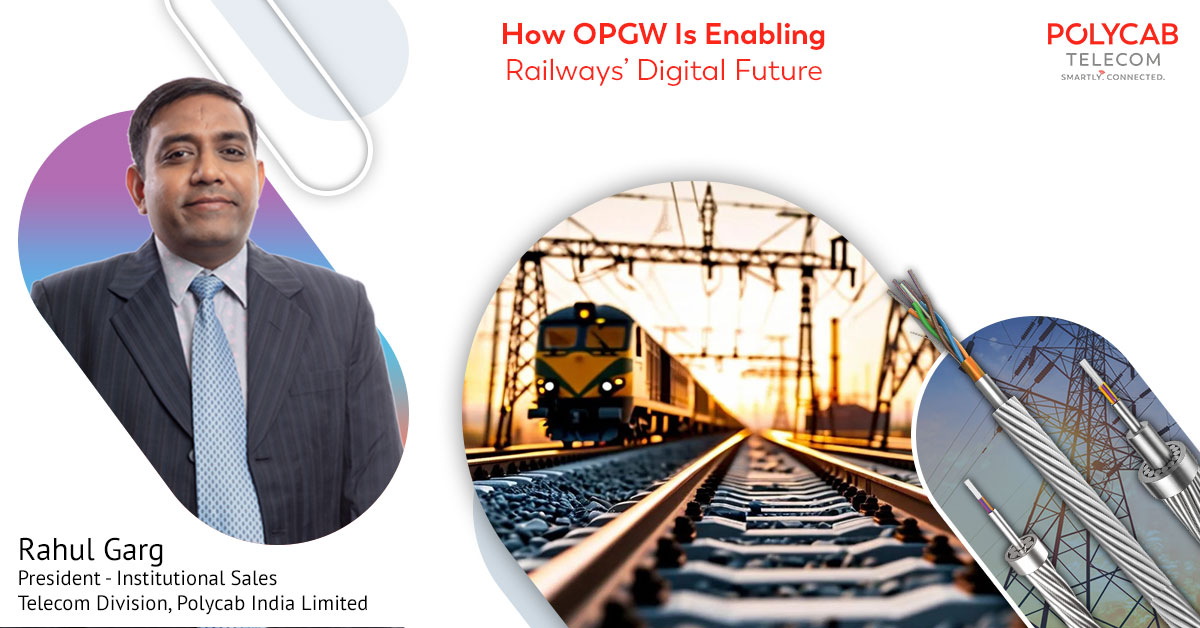
A few years ago, during a closed-door infrastructure review, a senior executive said something that didn’t sound remarkable at the time-but has aged incredibly well: “We’ve spent decades optimizing how trains move. We’ve barely begun to optimize how information moves.”
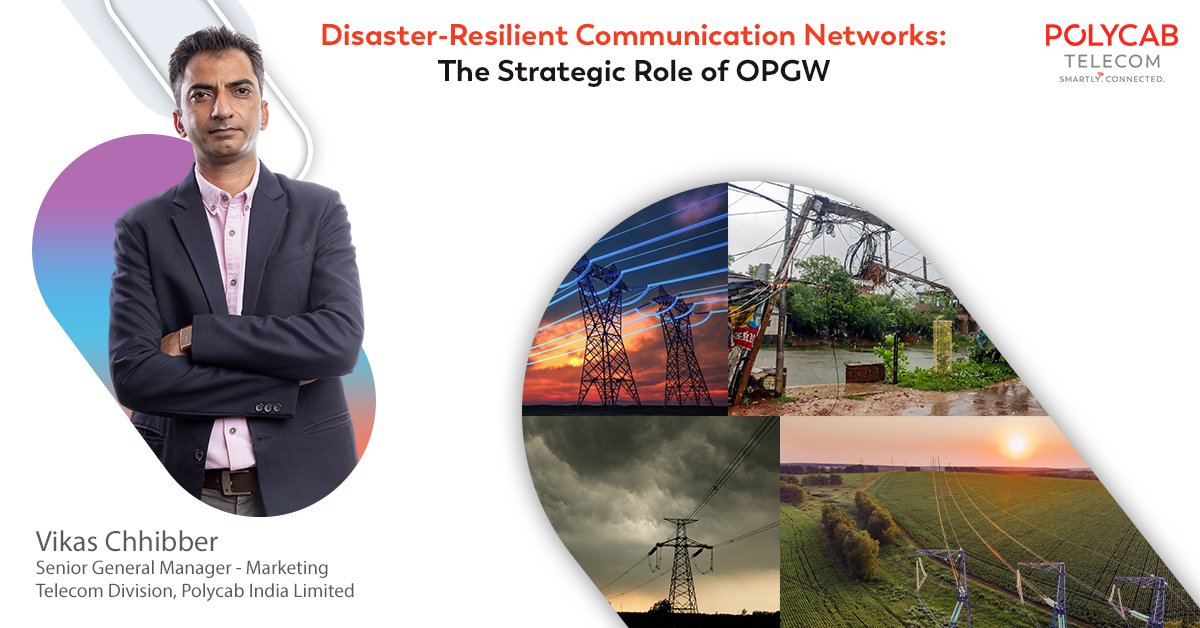
That imbalance is now being corrected. Indian Railways’ adoption of Optical Ground Wire (OPGW) is a deeper shift: from operating a physical network to building a digital infrastructure platform that underpins safety, operations, and future services.
- A Balanced Approach, Not A Silver Bullet
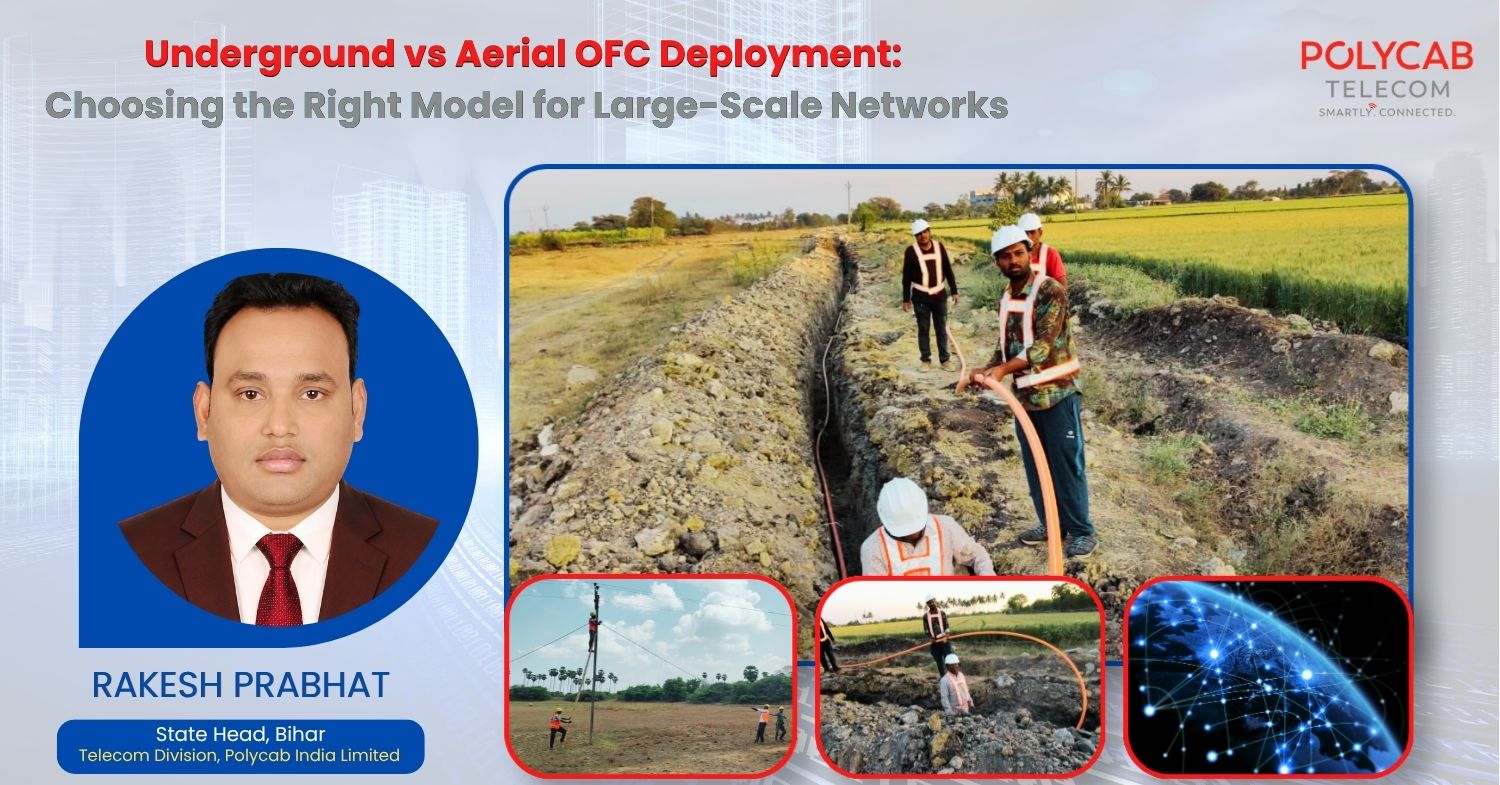
Aerial fibre brings clear advantages—faster deployment, integration with existing traction infrastructure, and reduced exposure to excavation-related damage. But it’s not without trade-offs. Exposure to environmental conditions, mechanical stress, and different maintenance dynamics all come into play. And that’s precisely why the current approach deserves attention.
Instead of betting on a single solution, Indian Railways is combining OPGW with underground optical fibre. One runs overhead along traction lines. The other runs beneath the track. Two independent paths. Two different risk profiles. This is engineering pragmatism at work. That said, the more resilient systems are almost always hybrids. They balance strengths. They absorb shocks.
That’s what’s happening here. By designing a dual-path communication architecture, Indian Railways is building redundancy into the system from day one. Not as a backup plan, but as a core principle.
- From Network Thinking To Platform Thinking
But the bigger story isn’t about cables—overhead or underground. It’s about how Indian Railways is beginning to think about its infrastructure.
Traditionally, railway systems have been engineered as linear assets. Tracks move trains. Signals manage movement. Communication supports operations. Each layer exists, but often in silos.
That model doesn’t hold anymore. What’s emerging instead is a platform mindset—where infrastructure is designed to support multiple layers of functionality simultaneously.
Communication is no longer just a support system. It’s becoming the connective tissue for:
- Safety systems like Kavach
- Real-time signalling and control
- LTE-based operational communication
- IoT-driven monitoring of assets
And here’s the key point: none of these systems work reliably without a robust, always-on communication backbone.
Which is why OPGW matters. It embeds high-capacity fibre directly into the electrification network. It turns the grid itself into a data layer. And once that happens, you’re no longer just running trains—you’re running an integrated digital system.
- What Most Analysts Miss
If one looks at the recent initiatives, Indian Railways is not just modernizing components. It is aligning them. The approvals covering fibre networks and Kavach deployment is a coordinated move—not a series of disconnected projects. Communication infrastructure is being built in tandem with safety systems and operational upgrades.
That’s how platforms are created.
- The Hidden Leverage Of Execution
There’s another layer to this story that doesn’t get enough attention—execution speed.
OPGW simplifies deployment in ways that matter at scale. It uses existing overhead infrastructure. It reduces dependence on excavation. It avoids some of the bottlenecks that slow down underground fibre projects.
That might sound operational. It’s actually strategic.
Because when you’re dealing with a network that spans thousands of kilometres, speed determines outcomes. Faster deployment means faster activation of safety systems. Faster rollout of communication layers. Faster realization of benefits. This is where OPGW quietly shifts the equation.
- Resilience Is The Real Currency
In most large infrastructure projects, while speed gets the due attention, it is resilience that keeps projects running. That’s where the current approach of the Indian Railways stands out. By combining aerial and underground fibre, Indian Railways isn’t betting on a single line of defense. It’s building in a fallback—quietly, deliberately. If one path goes down, the other keeps things moving. No drama. No scrambling.
That’s not just solid engineering. That’s strategic thinking.
In a network as vast and tightly interlinked as railways, downtime doesn’t stay contained. It spills over—into safety risks, operational delays, and eventually, public trust. And once trust takes a hit, recovery is far harder than fixing any piece of infrastructure.
- The Bottom Line
OPGW will never be the headline story. It won’t capture public imagination the way high-speed trains or new corridors do. But it will determine how reliably those systems function.
In complex networks, the most consequential decisions are often the least visible. They sit beneath—or above—the surface, quietly shaping performance, resilience, and long-term potential.
Indian Railways’ move toward OPGW is one of those decisions. And over time, it won’t just carry data across the network. It will carry the network into its next phase—more connected, more resilient, and far more intelligent than anything we’ve seen before.