

Fiber-optic technology has become a part of our life. Higher bandwidths over greater transmission distances and high-performance AV-transmission have been made possible through the technology. Many advantages of fiber-optics over copper wire-based transmission have been discovered. The global fiber-optics market is expected to grow to USD 17.95 billion by 2033 at a CAGR of about 6.6% during the forecast period of 2026-2033.
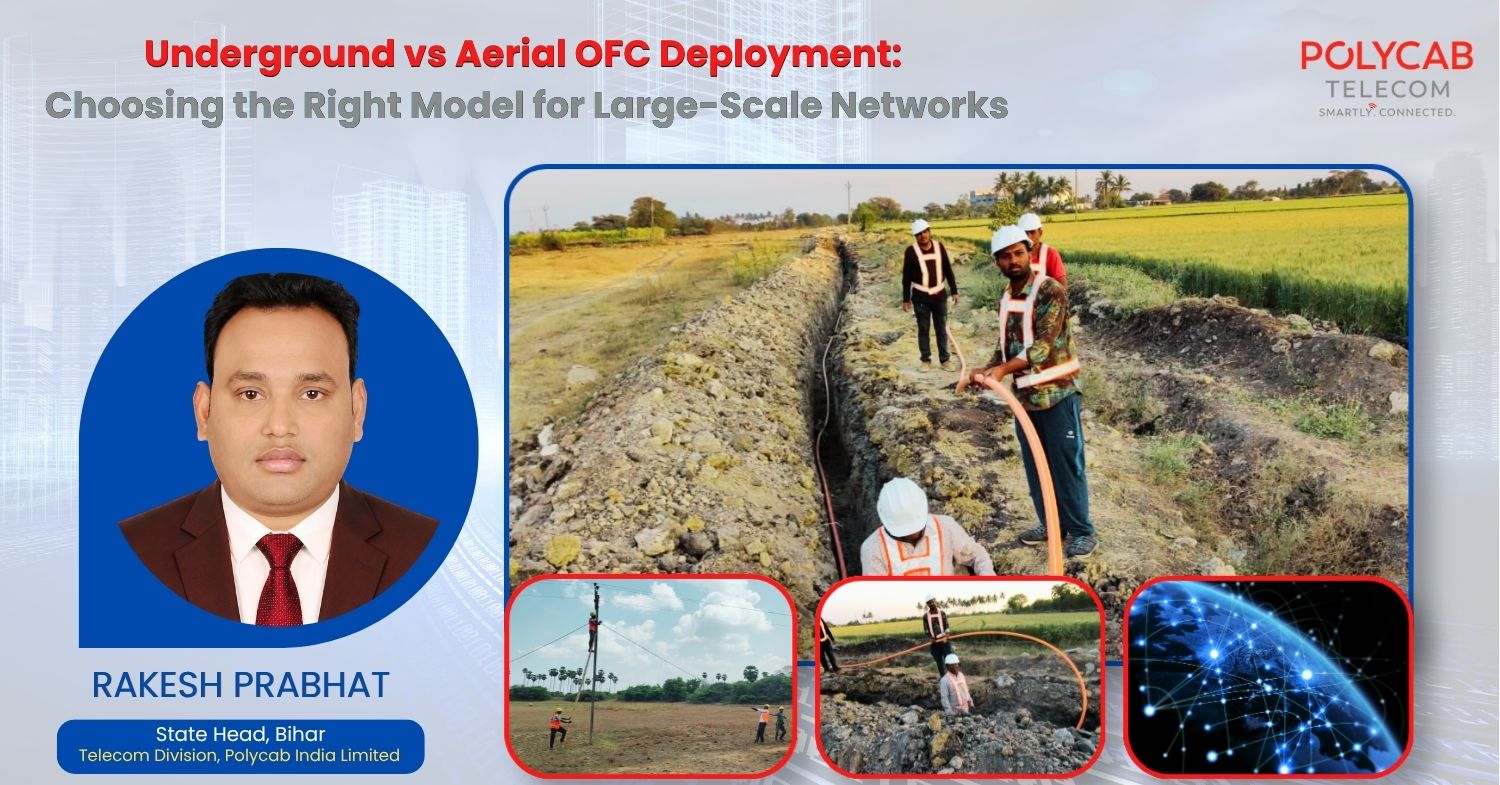
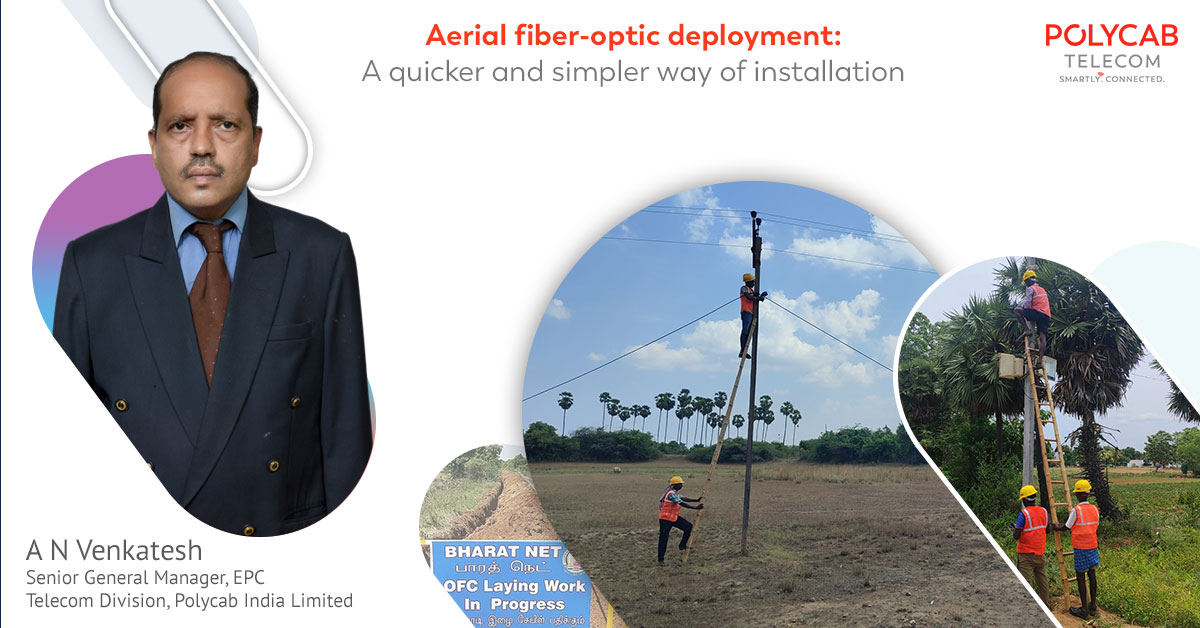
Fiber-optic networks are constructed through the placement of Optical Fiber Cables (OFCs) both, in underground and aerial ways. Aerial fiber-optic construction comes across as a cost-effective option, as we use existing infrastructure, like utility or telephone poles, towers or other structures above the ground, for the OFCs to be laid. Since we do away with digging up trenches, roads, sidewalks and other paths of transportation for the installation process, Aerial projects are less time-taking. Taking RoW permissions from pole-owners during the design phase of an Aerial project is integral to the entire process. Though Aerial installation is a much faster and cheaper method, yet a little bit of vulnerability remains, with the OFCs being directly exposed to the nature-related events and weather-elements. Aerial cables are generally classified in two types, i.e. Catenary Wire and Self-supporting. A Catenary Wire is regular outdoor loose tube cable that can be helically lashed to a messenger or another cable, whereas commonly found Self-supporting aerial cables are designed for easy and one-step installation. There are different kinds of Self-supporting aerial OFCs in the market. Determination of the type of cable definitely must hinge on the local conditions and weather-variations, including the maximum and minimum temperatures, duration of sun-exposure, humidity etc. In fact, the failure rate of Aerial OFCs is higher than the pipeline or directly-buried cables. But surely, Aerial cables have shorter installation-time than their underground counterparts, with an easier scope for maintenance and repair due to the accessibility to the cables. All-in-all, Aerial fiber-optic installation is normally executed for secondary trunk level and below and is characteristically appropriate for areas with flat terrain and small undulations. A thorough arrangement for traffic-control, precise equipment-usage and detailed analysis of the hazards and risks associated with the work is paramount.
Polycab Telecom, a division of Polycab India Ltd., is best-known for the delivery of major telecom infrastructure projects, with capabilities to roll out large telecom Infrastructure projects for both, Broadband and Wireless Networks. We’ve been regularly delivering our services for BharatNet, one of Govt. of India’s ambitious projects that is on course to connect every Indian village to opportunity-filled digital future. In BharatNet Phase-II, we achieved back-to-back timely completion of projects in Gujarat and Bihar, doing mostly Underground Cable Installation. Under Phase-II itself in Tamil Nadu, we’ve laid OFC-based network across nearly 13,920 kms, with almost 85% being aerial and the rest underground, as mandated by the TANFINET, a Special Purpose Vehicle (SPV) instituted by the state. Under BharatNet Phase-III, we’re already on our way to develop, upgrade, operate and maintain the middle-mile network in Karnataka, Goa and Puducherry under Package 4 and in Bihar under Package 7.