
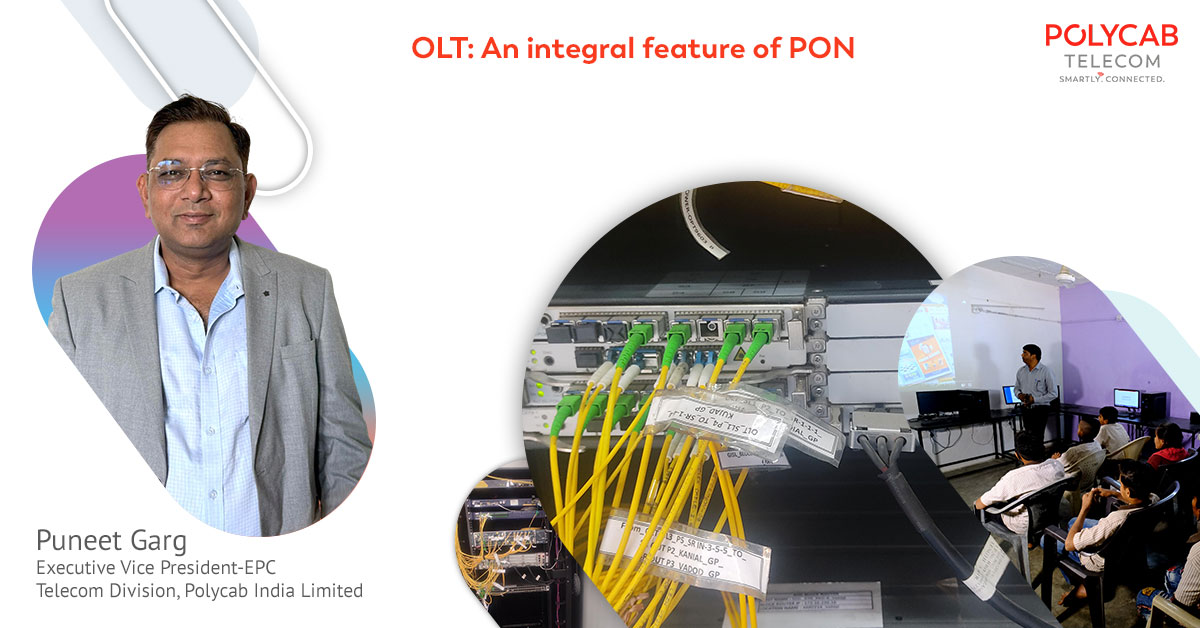

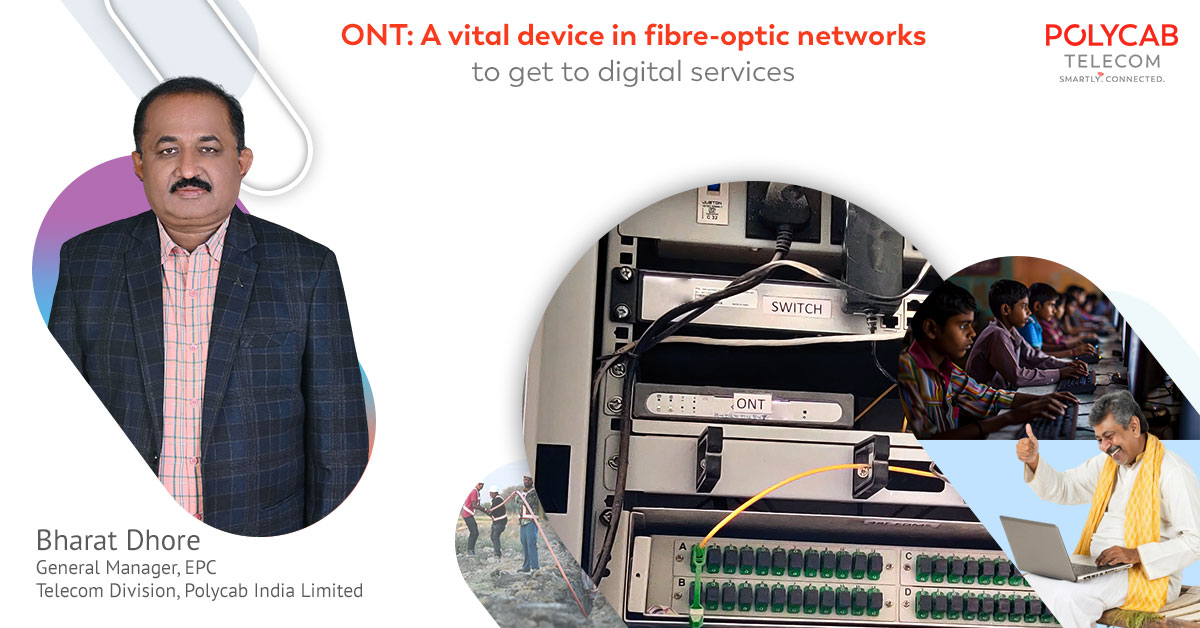

Fiber-optic technology has been the game-changer in the network infrastructure-development in recent times. The technology has accelerated the installers to optimized FTTx solutions, with cost-effective services and greater bandwidth-capabilities. With FTTH broadband connections entailing Active Optical Networks (AON) and Passive Optical Networks (PON), the Gigabit Passive Optical Network (GPON) normally has an endpoint hardware device, called Optical Line Terminal (OLT). Conceived as one of the integral devices of PON and placed at the service provider’s location, an OLT carries the performance of the entire network-connection. In simple terms, the OLT links Optical Fibre Cables (OFCs) and transfer-signals. As the starting point for the PON, the OLT works as a multi-service-providing platform that supports IP-services and traditional TDM-services simultaneously. Positioned at the edge of the Metropolitan Area Network (MAN) or at the exit of the community-access network, it helps in controlling, managing and measuring the distance to customer-terminal devices like the Optical Network Units (ONUs). With a Central Processing Unit (CPU), Passive Optical Network Cards, a Gateway Router (GWR) Card and a Voice Gateway Uplink (VGW) Card, the OLT can transmit a data-signal to the users at 1490 nanometres or can serve up to 128 Optical Network Terminals (ONTs) at a range of up to 12.5 miles by using optical splitters. Under BharatNet, world’s largest rural broadband project, OLTs installed at each Block serve as the service-providers’ endpoints of their PONs. These OLTs make possible the conversion between the electrical signals used by the equipment of the service-provider and the fibre-optic signals used by the PONs.
Polycab Telecom, a division of Polycab India Ltd., is best-known for the delivery of major telecom infrastructure projects, with capabilities to roll out large telecom Infrastructure projects for both, Broadband and Wireless Networks. We’ve been regularly delivering our services for BharatNet, one of Govt. of India’s ambitious projects that is on course to connect every Indian village to opportunity-filled digital future. In BharatNet Phase-II, we achieved back-to-back timely completion of projects in Gujarat and Bihar, doing mostly Underground Cable Installation. Working for Gujarat Fiber Grid Network Ltd. (GFGNL) in Gujarat under the project, we made OLT to GP (Optical Network Terminal) connection in an innovatively apt Star Topology, in a manner that the nearest OLT was connected in a cascaded manner with the next OLTs and all of them were connected to the State Data Centre (SDC) at Gandhinagar.
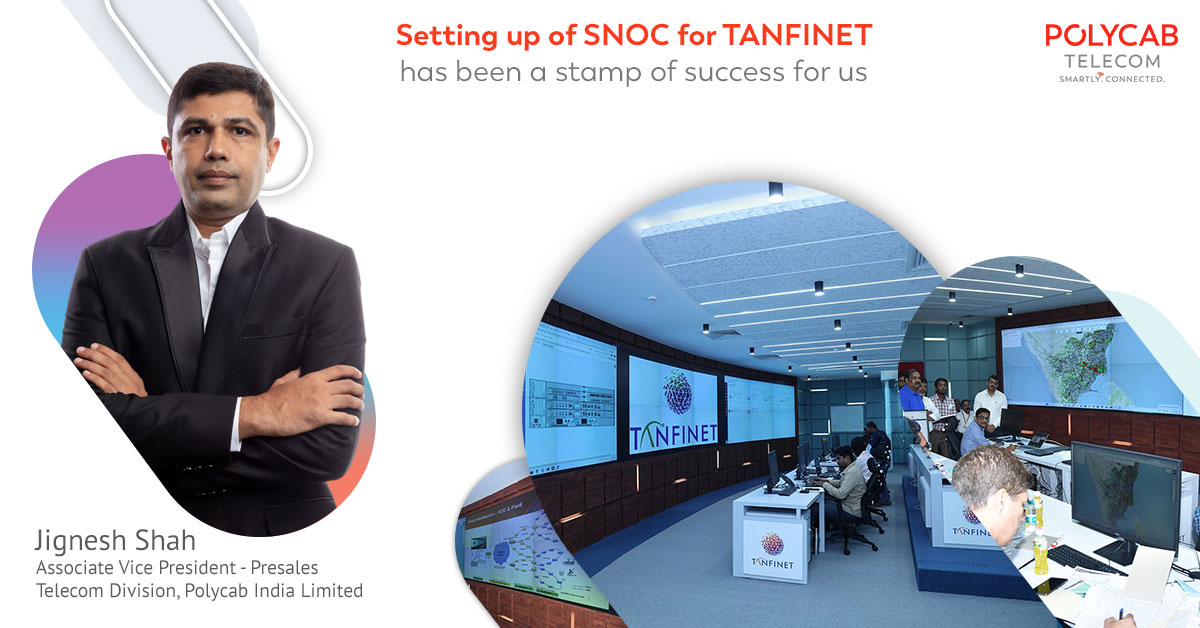
Under Phase-II itself in Tamil Nadu, we’ve laid OFC-based network across nearly 13,920 kms, with almost 85% being aerial and the rest underground, as mandated by the TANFINET, a Special Purpose Vehicle (SPV) instituted by the state. Under BharatNet Phase-III, we’re already on our way to develop, upgrade, operate and maintain the middle-mile network in Karnataka, Goa and Puducherry under Package 4 and in Bihar under Package 7.