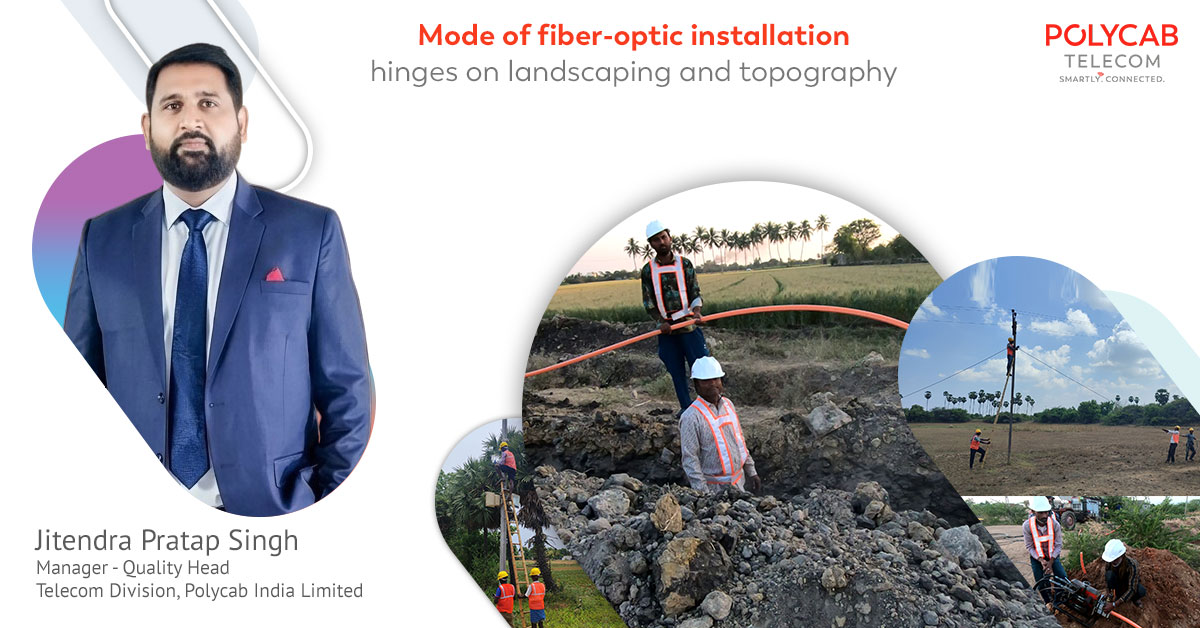

Optical Fiber Cables (OFCs) are now everywhere. In fact, OFCs have become one of the essential pillars of this smart era.
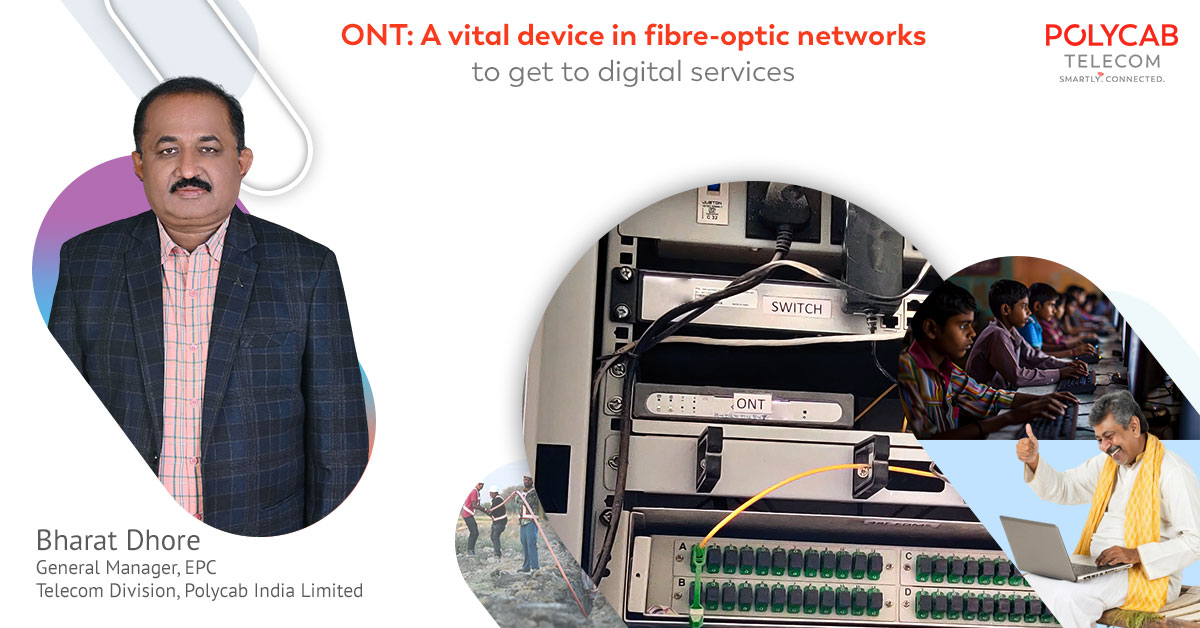
An ONT is an effective way to harness internet in fibre-optic technology.
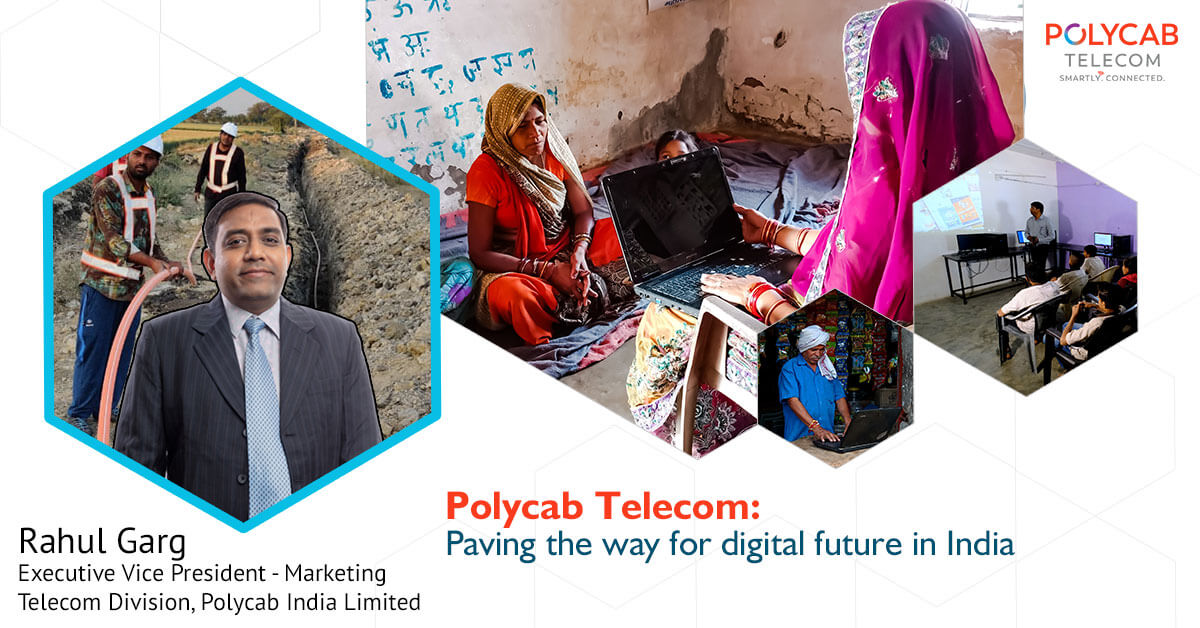
Digital accessibility enables economic transformation in any country. Digital India, a campaign launched by the Indian Govt. in 2015, has made government services increasingly available to people across the country electronically with internet-inclusion and enhancement in online infrastructure.
Digital flow of information has stirred fundamental change in living and working world-over. We live in a networked era now. Internet and IoT-based evolutions have made a positive impact on business, education, healthcare and governmental services.
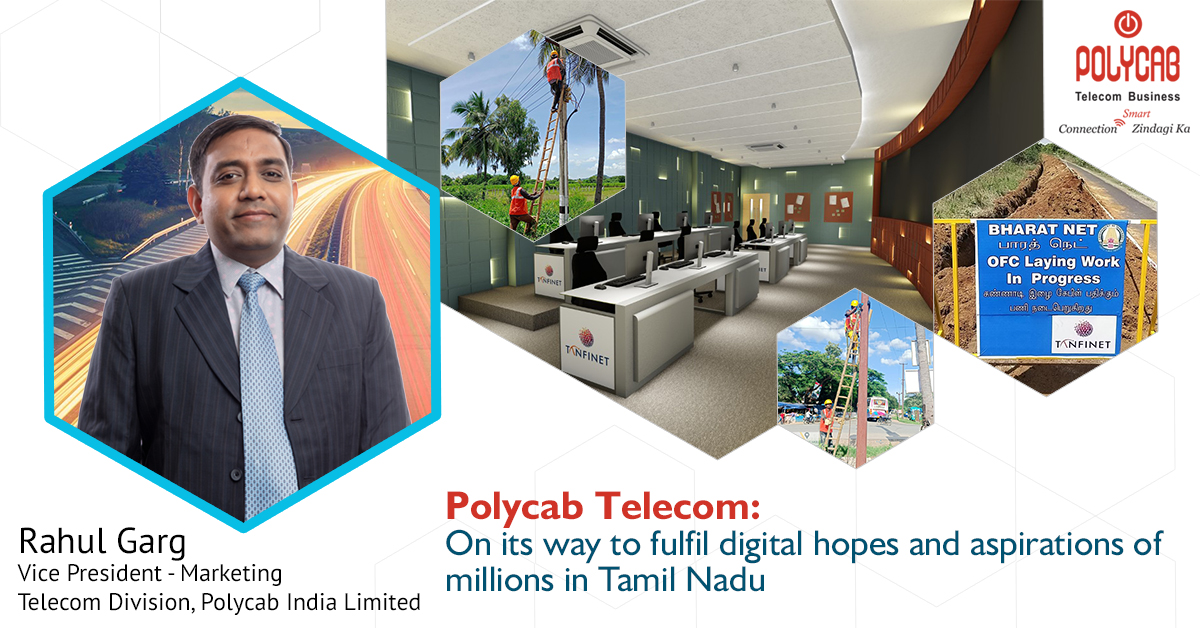
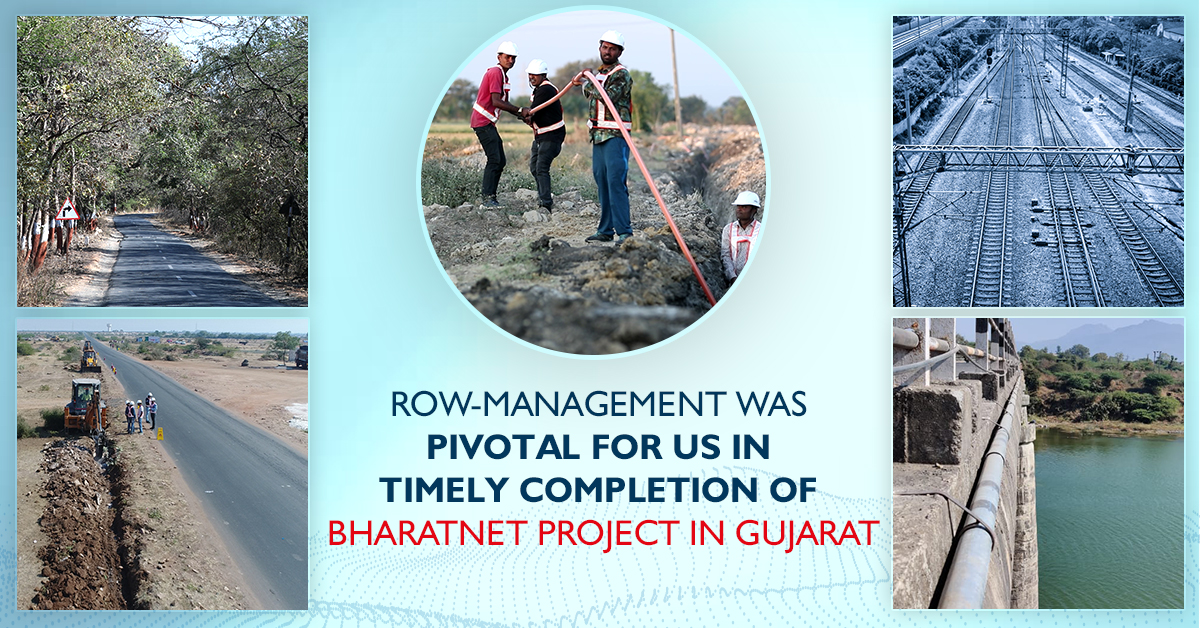
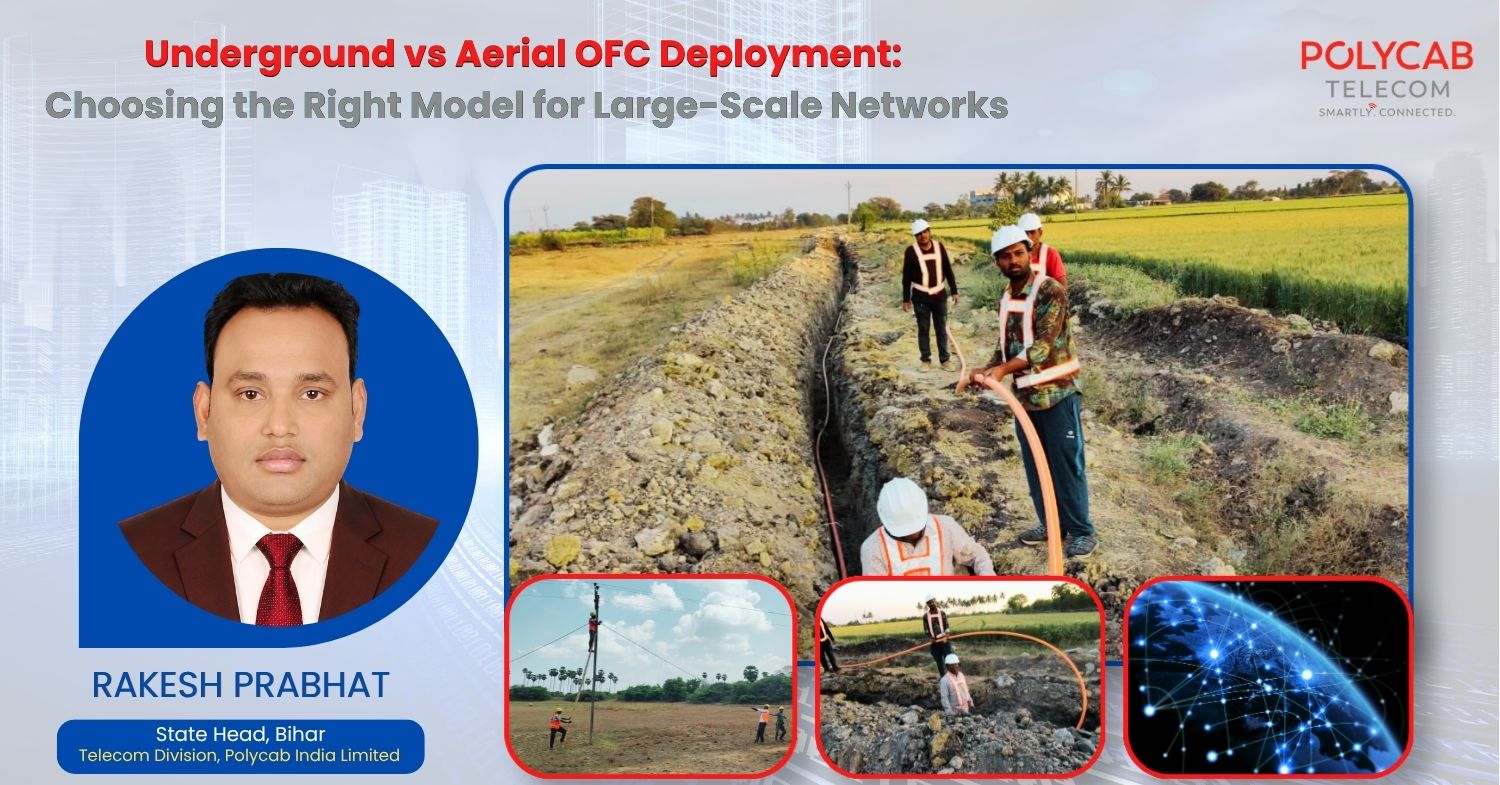
RoW-management is integral in the deployment of optical infrastructure and can have direct consequences in the implementation-timelines. After being entrusted with the responsibility of a Project Implementing Agency (PIA) in phase 2 of the BharatNet project for Saurashtra-region in Gujarat, Polycab Telecom went on to complete the assignment with an efficient RoW approval process in the core.
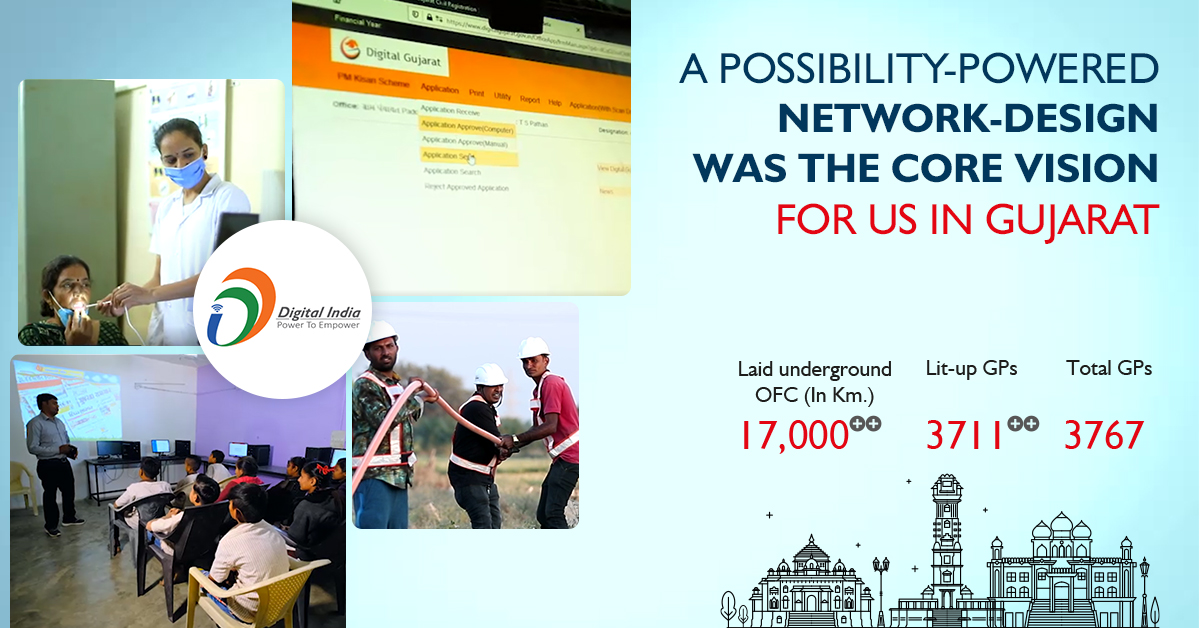
Polycab Telecom, as a consortium-partner with GTPL, was awarded Package B (Saurashtra-region) in Phase-II of BharatNet, world’s largest rural broadband project, to lay 17,000* kms of underground OFCs to connect 3767* Gram Panchayats (GPs) in 65 Blocks across 10 districts of Gujarat, including their Operation and Maintenance (O&M) for 7 years.
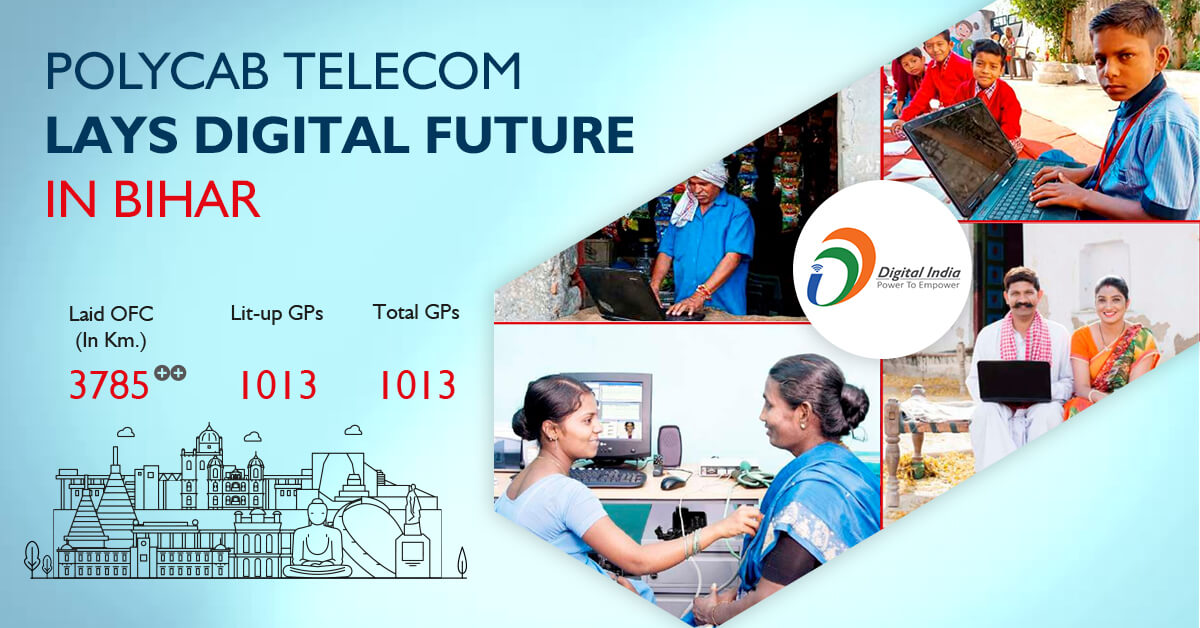
BharatNet, with its ambitious aim to provide last-mile digital connectivity through the OFCs in more than 2.5 lakh Gram Panchayats (GPs) in India, has come a long way to facilitate Digital India-journey. Bihar, following the Public Sector-led model of BharatNet Phase-II, was divided into 3 Packages under the project. Polycab Telecom was awarded Bihar Package 3 (B3) to design and build the Digital Highway with Optical Fibres and maintain it for 6 years.
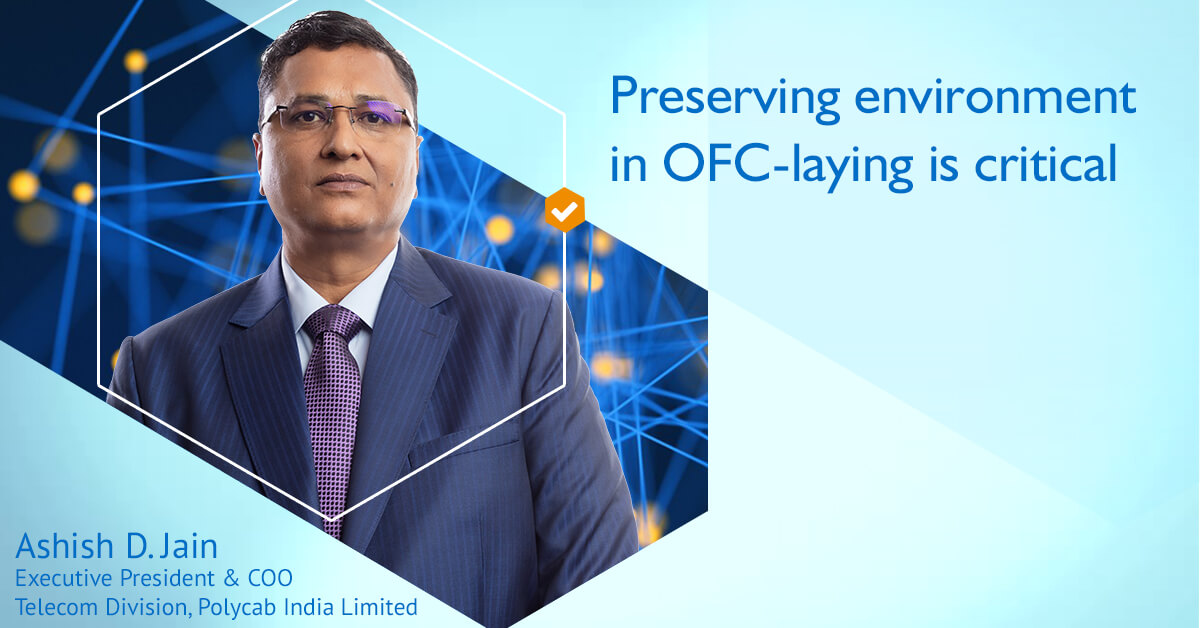
Undeniably fibre-optics technology carries the promise of a flexible, scalable and full-service network platform, enabling the service-providers to transmit massive amounts of information at record-breaking speeds, with minimal interference. But laying of optical-fibre cables comprises processes and procedures which, when not strictly adhered to, could be a potential threat for the environment.
Today Dense Wavelength Division Multiplexing (DWDM) is one of the most frequently applied fiber-optic transmission technologies to build core telecom networks. DWDM is an optical multiplexing system, wherein data-signals from varied sources are put together, with each signal being transmitted on a separate light wavelength. More than 80 separate wavelengths, each about 0.8 of a nanometre-wide, can share a single optical fiber.