
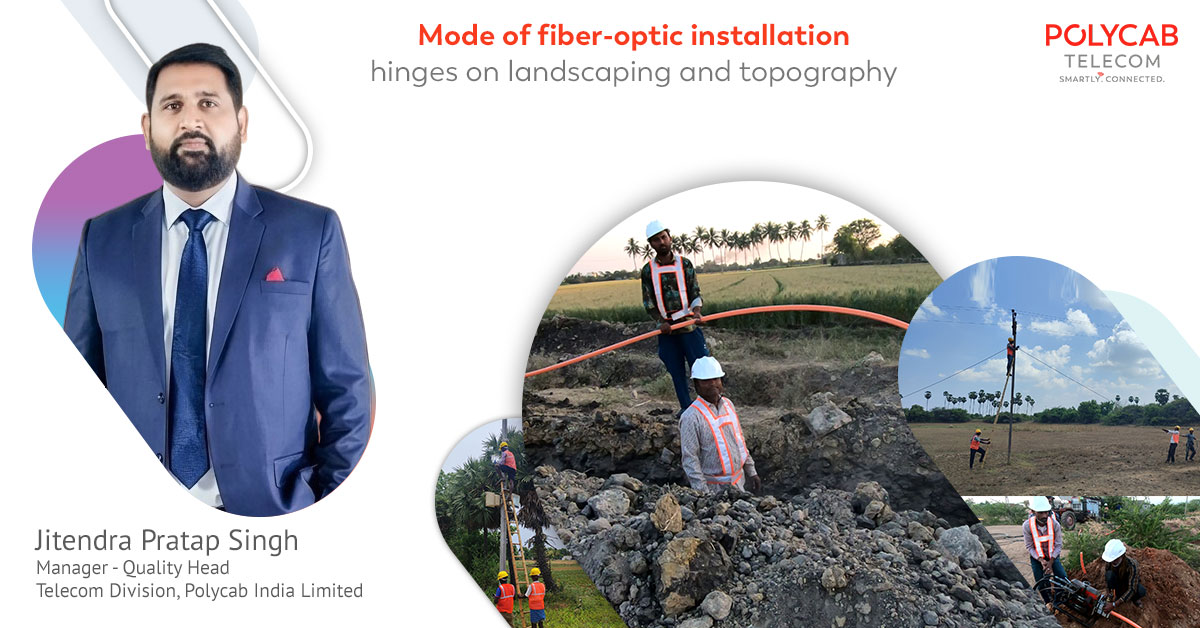


Optical Fiber Cables (OFCs) are now everywhere. In fact, OFCs have become one of the essential pillars of this smart era. Successful fiber-optic installations are increasing by the day in India and the world. OFC-installations can be executed generally in two ways. Either the cables can be installed above ground with the help of varied aerial equipment or they can be laid underground. With the digital infrastructure is being set up at a frenetic pace all around the globe, benefits and drawbacks of both the processes of fiber-optic installations are being also explored and assessed by operators.
When it comes to a cost-effective method of OFC-installation, aerial installation certainly becomes the preferred choice because installers can use existing pole infrastructure and do away with the compulsion to dig up roads or ground to bury cables or ducts. Setting up the infrastructure at first becomes too inexpensive as against the underground installation. But then, underground OFCs are far less likely to be damaged by above-ground elements, hostile weather-conditions or even wildlife, whereas aerial OFC-installation is always fraught with the danger of exposure to rain, sunlight, strong winds and birds. We can always alleviate the vulnerability by increasing the strength of the cables and the supporting poles, but that increases the final installation-costs. While underground deployments are way more reliable than aerial routes in terms of external elements, it also uses less site-space to place and connect fibers. In view of steep terrain, forests, rivers, roads, rocky ground etc., we require skilled labour and deft excavation to deploy underground OFC-installations. Dissimilar to duct-installations, cables laid underground are difficult to repair and maintain as they are rooted to the ground, subsequently, underground repairs would always need re-excavation. So, Thus, choosing between aerial or underground mode of OFC-deployment is complicated and we ought to decide the go-to method of installation on geology of the area with a case-to-case basis. Normally, aerial installation is fit for rural areas where there is no specific space-limitation and underground fiber-optic installation is good for urban areas, where the cables don’t become an awkward sight in neighbourhood and are also safe from the external elements for a longer period of time.
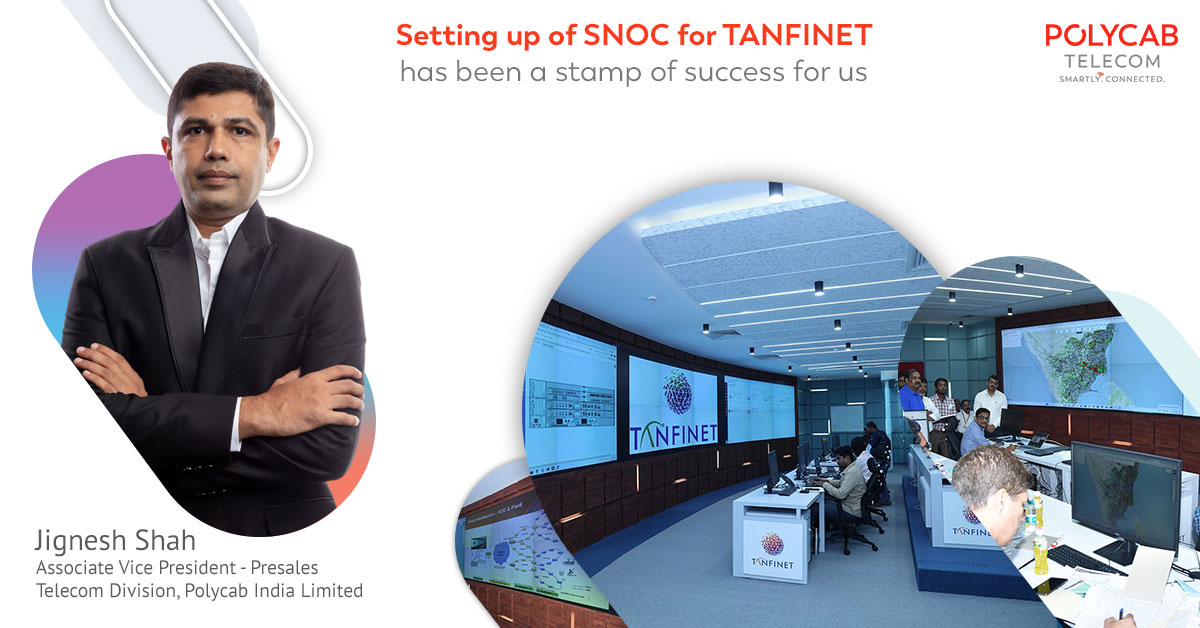
Polycab Telecom, a division of Polycab India Ltd., is best-known for the delivery of major telecom infrastructure projects, with capabilities to roll out large telecom Infrastructure projects for both, Broadband and Wireless Networks. We’ve been regularly delivering our services for BharatNet, one of Govt. of India’s ambitious projects that is on course to connect every Indian village to opportunity-filled digital future. In BharatNet Phase-II, we achieved back-to-back timely completion of projects in Gujarat and Bihar, doing mostly Underground Cable Installation. Under Phase-II itself in Tamil Nadu, we’ve laid OFC-based network across nearly 13,920 kms, with almost 85% being aerial and the rest underground, as mandated by the TANFINET, a Special Purpose Vehicle (SPV) instituted by the state. Under BharatNet Phase-III, we’re already on our way to develop, upgrade, operate and maintain the middle-mile network in Karnataka, Goa and Puducherry under Package 4 and in Bihar under Package 7.