

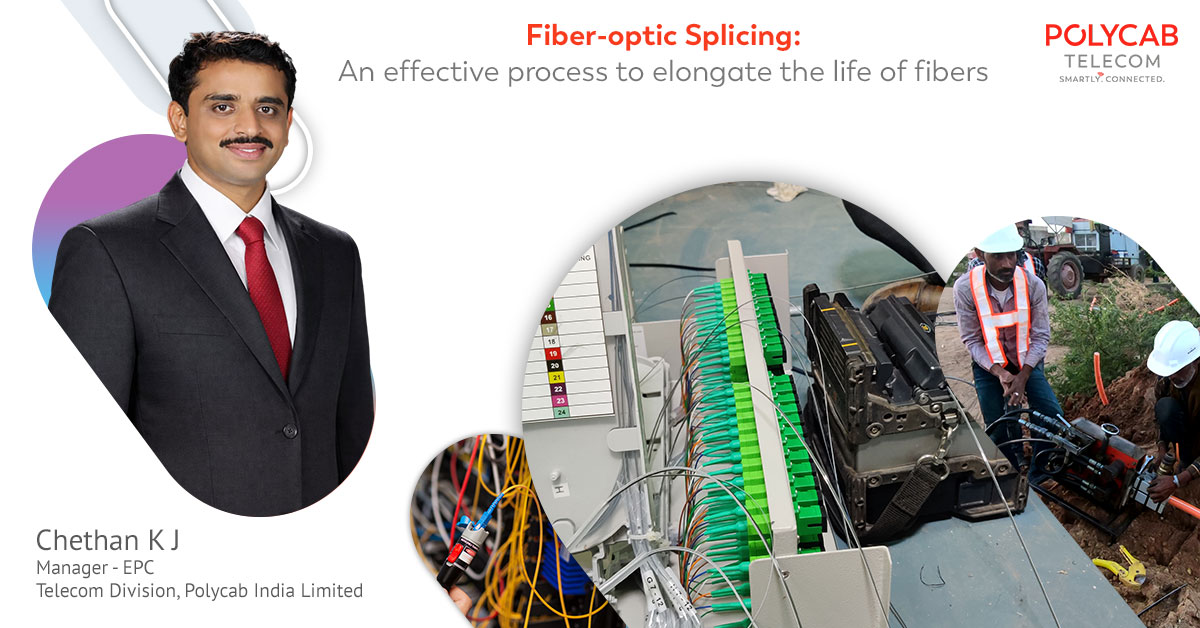
Splicing of optical fibers is an effective technique to join two Optical Fiber Cables (OFCs) or bundles of them. Essentially, Splicers are couplers that systemize a connection between two fibers or fiber-bundles. But connecting two OFCs or the procedure of splicing is a demonstration of expertise and exactness. More so, when we know that fiber-technicians must be fully aware of the geometry of the fibers to be spliced and they must take proper care of the fibers’ alignment and mechanical strength before or while executing the procedure.
With three fundamental techniques for splicing the optical fibers, i.e. Fusion Splicing, Mechanical Splicing and Elastic-tube Splicing, splicing is done when OFCs need to be extended during a cable-run or these cables, underground or overhead, get separated or disconnected. Splicing is also done for assembling cables. Elastic-tube Splicing is done with the multimode optical fibers. Fusion Splicing comprises thermal joining together of two fibers. With a V-shaped substrate, two fiber-ends are butted in the groove and connected with a proper adhesive in the Mechanical Splicing. For underground installations, Splicing is a quick and apt technique to re-connect buried detached OFCs. Not only for joining two OFCs, Splicing is also used to achieve a quality fiber-path, in line with both, customer-specifications and expectations. Cables are installed into a Splice Enclosure or Panel to make the connection as per the conceptualized network. Fusion Splicing is the costliest of the three kinds of splicing, but it provides a longer life to the fibers.
Fiber-optic Splicing is mainly done to establish long optical links for better and long-distance signal-transmission, which is why it is instrumental to meet the high demands of our nation’s rapid fiber-infrastructure growth. Fiber-optic Splicing is a hugely significant process, when we know that this forms the first level of maintenance, ensuring minimized disruption to internet-connectivity in Gram Panchayats (GPs), covered under Govt. of India’s BharatNet, world’s largest rural broadband project.
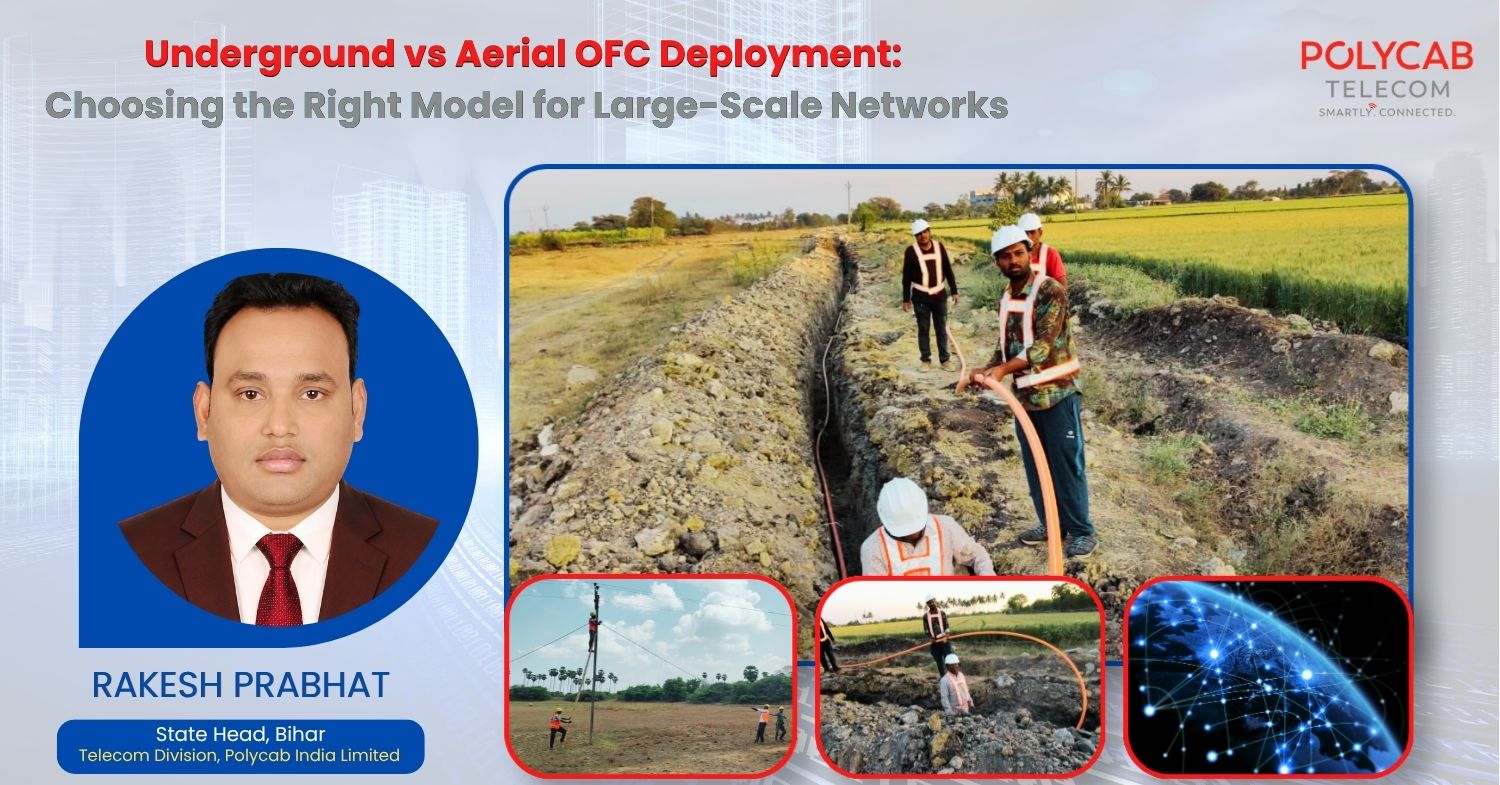
Polycab Telecom, a division of Polycab India Ltd., is best-known for the delivery of major telecom infrastructure projects, with capabilities to roll out large telecom Infrastructure projects for both, Broadband and Wireless Networks. We’ve been regularly delivering our services for BharatNet, one of Govt. of India’s ambitious projects that is on course to connect every Indian village to opportunity-filled digital future. In BharatNet Phase-II, we achieved back-to-back timely completion of projects in Gujarat and Bihar, doing mostly Underground Cable Installation. Under Phase-II itself in Tamil Nadu, we’ve laid OFC-based network across nearly 13,920 kms, with almost 85% being aerial and the rest underground, as mandated by the TANFINET, a Special Purpose Vehicle (SPV) instituted by the state. Under BharatNet Phase-III, we’re already on our way to develop, upgrade, operate and maintain the middle-mile network in Karnataka, Goa and Puducherry under Package 4 and in Bihar under Package 7.