


In 2011, India embarked on an ambitious journey that few nations have dared to attempt at this scale. The goal was simple yet profound: bring high-speed optical fiber to every gram panchayat in the country – roughly 2.5 lakh of them. What started as the National Optical Fibre Network has now evolved into BharatNet. As of today, over 2.14 lakh gram panchayats are connected, with more than 6.93 lakh kilometres of fiber laid across the length and breadth of the country. When completed, it will stand as one of the largest rural fiber networks ever built by any Government. Very few public infrastructure projects in the world have maintained such sustained ambition – funded across governments, adapted through changing technologies, and carried forward with quiet determination from the 2G era to a 5G-ready future.
The Real Difference Fiber Makes
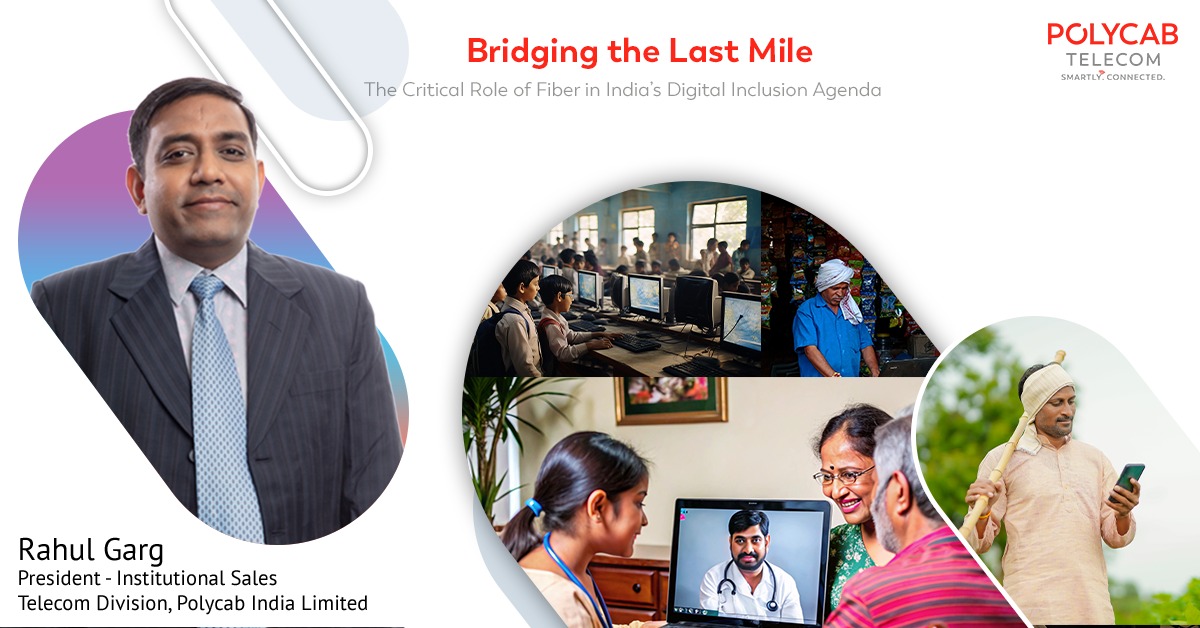
Numbers tell only part of the story. The true magic of fiber becomes visible when you look at how it changes everyday lives in India’s villages. Imagine a future where a pregnant woman in a remote village no longer needs to travel for hours for a routine check-up, because reliable fiber connectivity enables access to specialist consultations closer to home. As fiber connectivity reaches more rural areas, telemedicine could become a practical reality, enabling high-quality video consultations, real-time sharing of medical reports, and faster access to specialist care.
Education is another area where the full potential of fiber connectivity can be transformative. If states have stable fiber connectivity, educational institutions can stream interactive classes, access digital textbooks, join virtual science labs, and learn from expert educators across the country. The learning gap between rural and urban students can narrow.
For farmers, widespread fiber connectivity could unlock better access to live market prices, weather intelligence, and expert agricultural advisory services, helping improve decision-making and reduce losses. It could also create new opportunities for rural entrepreneurs, self-help groups, and young people by expanding access to digital marketplaces, online learning, and remote employment opportunities. Fiber-enabled digital infrastructure can bring government services closer to citizens, allowing people to access welfare schemes, update records, and complete essential transactions without travelling long distances.
India now has over one billion internet users, with rural users forming the majority for the first time. Much of this remarkable shift is happening because fiber is finally reaching places where mobile networks alone could never deliver consistent, high-speed connectivity.
As BharatNet moves toward connecting every gram panchayat, the network being built today has the potential to become India’s digital highway for the next generation. The true value of fiber will not be measured in kilometres laid, but in the opportunities it unlocks – from healthcare and education to agriculture, entrepreneurship, and public services. The last mile is ultimately about ensuring that every citizen can participate fully in India’s digital future.